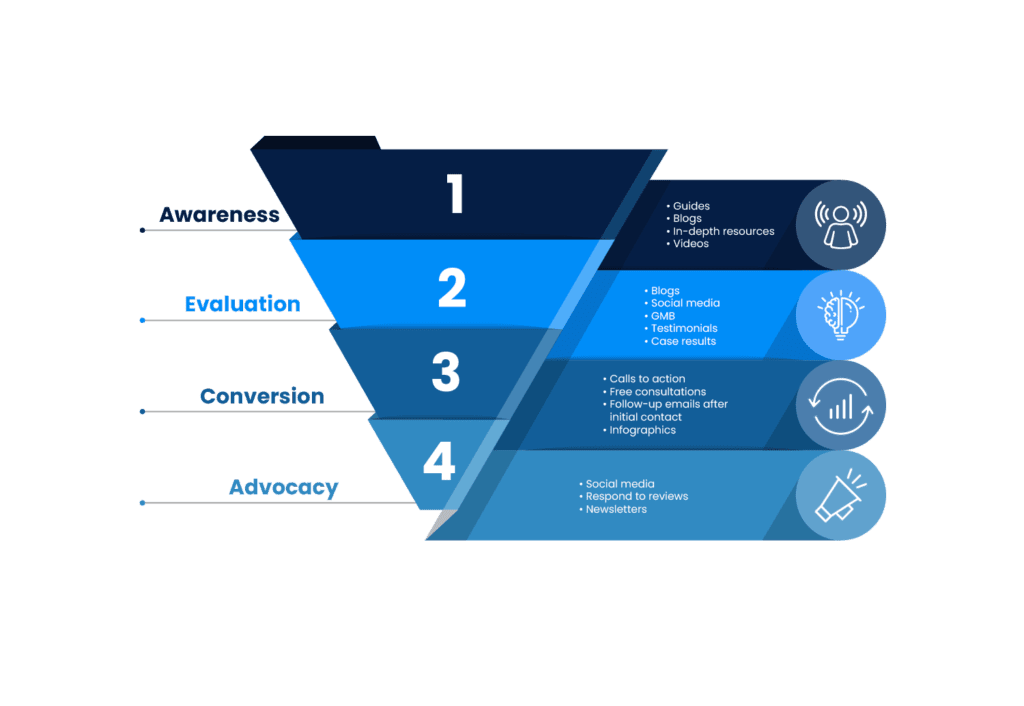
In the competitive world of legal services, attracting and converting potential clients requires more than just expertise — it demands a strategic marketing funnel tailored to the legal industry. A well-crafted legal marketing funnel guides prospects smoothly from awareness to decision-making, ultimately converting them into loyal clients.
This detailed guide breaks down how to create a legal marketing funnel that builds trust, nurtures leads, and drives measurable business growth.
What Is a Legal Marketing Funnel?
A legal marketing funnel is a step-by-step framework that illustrates the journey a potential client takes from first encountering your law firm to becoming a paying client. The funnel concept is based on narrowing the audience through stages such as:
- Awareness: Prospects discover your firm
- Interest: Prospects engage with your content or services
- Consideration: Prospects evaluate your expertise and fit
- Conversion: Prospects contact or retain your firm
- Retention & Referral: Clients become repeat clients or advocates
Each stage requires targeted strategies and content to maximize conversion rates.
Step 1: Define Your Target Audience
Before building your funnel, you must clearly identify who your ideal clients are. Legal services vary widely—family law clients differ drastically from corporate law prospects.
- Create client personas including demographics, legal needs, pain points, and online behavior.
- Use market research, client interviews, and analytics data.
- Understanding your audience ensures you tailor messaging that resonates.
Step 2: Attract Attention with Awareness-Stage Content
The top of the funnel is about visibility. Your goal is to capture the attention of individuals searching for legal help.
Effective Tactics:
- SEO-Optimized Blog Posts: Write authoritative articles answering common legal questions (e.g., “What to Do After a Car Accident”).
- Social Media Campaigns: Share valuable tips and success stories on LinkedIn, Facebook, or Instagram.
- Paid Ads: Use Google Ads and social media ads targeting relevant keywords and demographics.
- Video Content: Short videos explaining legal concepts boost engagement and trust.
This content should be educational, non-salesy, and designed to solve immediate problems.
Step 3: Capture Leads with Value-Driven Offers
Once prospects are aware of your firm, encourage them to share their contact information in exchange for valuable resources.
Lead Magnet Ideas:
- Free eBooks or Guides (e.g., “The Ultimate Guide to Divorce Proceedings”)
- Legal Checklists or Templates
- Webinars or Live Q&A Sessions
- Free Initial Consultations or Case Evaluations
Use compelling landing pages with clear calls-to-action (CTAs) and simple forms. The goal is to build a list of qualified leads for ongoing engagement.
Step 4: Nurture Leads with Targeted Email Marketing
Not all prospects are ready to hire immediately. An email drip campaign keeps your law firm top of mind and nurtures trust over time.
Best Practices:
- Segment your email list based on practice areas or client needs.
- Send personalized educational content, updates on legal changes, and client testimonials.
- Include CTAs inviting recipients to schedule consultations.
- Maintain consistent but respectful communication frequency.
Effective nurturing converts cold leads into warm prospects ready to commit.
Step 5: Build Trust During the Consideration Stage
At this stage, prospects evaluate whether your firm is the right choice. Your goal is to demonstrate credibility and differentiate your services.
Tactics Include:
- Showcase Client Testimonials and Case Results prominently on your website.
- Publish detailed attorney bios highlighting experience and credentials.
- Provide FAQ pages addressing common concerns.
- Offer transparent pricing information where possible.
- Encourage online reviews on platforms like Google My Business and Avvo.
Clear, honest communication is critical to overcoming hesitation.
Step 6: Convert Prospects with Seamless Contact and Intake
A clunky or slow intake process can lose potential clients. Optimize your funnel’s bottom with easy-to-use contact and intake systems.
Tips:
- Implement online scheduling tools for consultations.
- Use chatbots or live chat to answer immediate questions.
- Streamline client intake forms with digital signature capabilities.
- Provide clear next steps and follow-up communication promptly.
A smooth experience reassures prospects and reduces friction in the decision-making process.
Step 7: Retain Clients and Encourage Referrals
Your marketing funnel doesn’t end at conversion. Happy clients can become powerful advocates.
Post-Conversion Strategies:
- Send thank-you emails and follow-ups on case progress.
- Request client reviews and testimonials.
- Maintain communication through newsletters sharing legal updates.
- Offer referral incentives or loyalty programs where ethical.
Building long-term relationships fuels repeat business and word-of-mouth growth.
Tools to Support Your Legal Marketing Funnel
To manage and optimize your funnel efficiently, consider integrating these tools:
- CRM Systems like Clio Grow or HubSpot for lead tracking
- Email Marketing Platforms such as Mailchimp or Constant Contact
- Landing Page Builders like Leadpages or Unbounce
- Analytics Tools including Google Analytics and SEMrush
- Online Scheduling tools such as Calendly or Acuity
Leveraging technology helps automate tasks and measure funnel performance.
Conclusion
Creating a legal marketing funnel is a strategic, stepwise process that transforms anonymous web visitors into trusted clients. By understanding your audience, delivering valuable content, nurturing relationships, and streamlining the client intake process, your law firm can maximize conversions and build lasting success.